The first cool evening of fall always brings the same temptation: light a fire, curl up, and enjoy the warmth. But if your Charlotte chimney hasn't been swept since last winter — or longer — that fire could come with hidden risks. Creosote buildup, animal nests, cracked liners, and blocked flues are the leading causes of chimney fires and carbon monoxide intrusion, and most of them show clear warning signs before disaster strikes.
At Robert's Chimney Service, we serve Charlotte neighborhoods from NoDa and Plaza Midwood to Myers Park and SouthPark seven days a week. Here are five signs your chimney is overdue for a professional cleaning — and what to do about each one.
1. You Notice a Strong, Smoky or Oily Odor from the Fireplace
If your unused fireplace is producing a strong campfire smell or a sharp, almost asphalt-like odor, that's a classic indicator of heavy creosote accumulation inside the flue. Creosote — a dark, tar-like byproduct of wood combustion — coats the interior walls of your flue and becomes increasingly flammable as it builds up in stages. First-stage creosote is a light, powdery soot. Third-stage creosote is a hardened, glazed coating that can ignite at temperatures your flue generates during a normal fire.
Charlotte's humid summers actually make this worse: moisture reactivates creosote odors even during months when you're not burning. If you smell smoke in a cold fireplace, schedule a chimney sweep and cleaning before your next fire. Our technicians use professional rotary brush systems and HEPA vacuums to remove all three stages of creosote buildup without leaving ash or soot in your home.
2. Smoke Backs Up into the Room When You Light a Fire
A properly functioning chimney creates a natural draft that pulls combustion gases upward and out of your home. If smoke rolls out of the firebox and into your living room instead of rising up the flue, something is obstructing or disrupting that draft. Common culprits include a closed or stuck damper, a debris-clogged flue, a bird or squirrel nest near the top of the chimney, or a damaged chimney cap allowing wind to push air back down.
Draft problems can sometimes indicate a more serious issue, like a cracked or undersized flue liner. We recommend pairing a cleaning with a Level I chimney inspection to rule out structural causes. If our inspection reveals liner damage, our team can walk you through chimney liner installation options to restore proper venting.
3. You Can See Daylight — or Debris — Inside the Flue
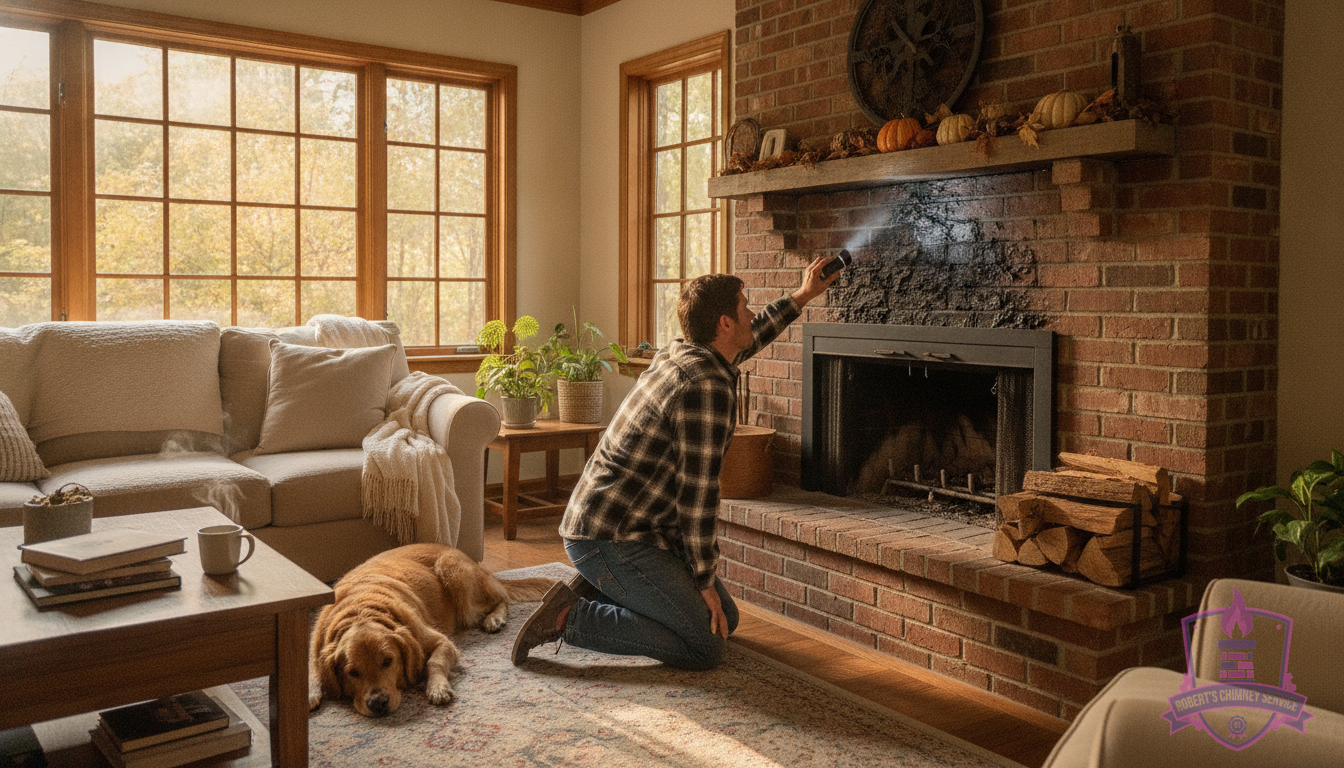
Grab a flashlight and look up your flue from inside the firebox. You should see a clean, dark passageway. If you see debris, animal nesting material, leaves, or — worryingly — light coming in from the sides rather than straight up, you likely have a blockage or a structural gap in your liner or chimney crown.
Animals seeking warmth in fall are a frequent problem for Charlotte chimneys without a properly installed chimney cap. Birds, squirrels, and raccoons build nests that can completely obstruct the flue, creating dangerous carbon monoxide backup. A professional sweep will clear the blockage and our technicians can inspect and replace your chimney cap and crown to prevent re-entry.
4. You See White Staining or Crumbling Brick on the Chimney Exterior
White streaks or powder on the exterior of your chimney — a condition called efflorescence — are a telltale sign that water is moving through your masonry. As moisture migrates outward through brick and mortar, it carries dissolved salts that crystallize on the surface. This is more than cosmetic: it means water is actively working inside your chimney stack, eroding mortar joints and potentially cracking your flue liner from the outside in.
Charlotte's freeze-thaw cycles in winter and summer thunderstorms accelerate this process significantly. If you notice crumbling mortar, spalling brick faces, or white staining, it's time to call for an inspection and ask about professional chimney waterproofing. Catching this early can save thousands in masonry restoration costs later. Homeowners in historic neighborhoods like Dilworth and Plaza Midwood, where original masonry chimneys are common, should be especially vigilant.
5. It's Been More Than a Year Since Your Last Sweep
Even if none of the above warning signs apply to you, the National Fire Protection Association (NFPA 211) recommends that wood-burning chimneys be inspected and cleaned at least once per year. Annual service catches small problems — minor mortar cracks, early-stage creosote, a loose damper handle — before they become expensive repairs or safety hazards.
If you burn more than a cord of wood per season, or if you've been using green or unseasoned firewood, you may need service more frequently. Our Charlotte chimney sweep appointments are available Monday through Sunday, 8 AM to 6 PM, so you can book at a time that works for your schedule.
Schedule Your Pre-Season Chimney Sweep in Charlotte Today
Don't wait until the first cold snap to find out your chimney has a problem. Robert's Chimney Service brings professional-grade equipment, NFPA-compliant procedures, and honest assessments to every home we visit across Charlotte and Mecklenburg County. We serve customers in University City, NoDa, Myers Park, SouthPark, Dilworth, Plaza Midwood, and everywhere in between.
Call (980) 480-4169 or email [email protected] to schedule your chimney sweep and cleaning before the heating season begins. Your family's safety is worth one phone call.