If you asked most Charlotte homeowners to name the biggest threat to their fireplace, they'd probably say fire. The answer, perhaps surprisingly, is water. In a city where summer thunderstorms roll through the Piedmont weekly and winter brings freeze-thaw cycles that stress masonry brick and mortar, moisture is the single leading cause of chimney deterioration — and most homeowners don't realize there's a problem until it becomes an expensive one.
At Robert's Chimney Service, we've inspected chimneys all across Charlotte — from historic bungalows in NoDa and Plaza Midwood to newer construction in SouthPark and University City — and water damage is consistently the most common underlying cause of the deterioration we find. Professional chimney waterproofing is one of the most cost-effective preventive services you can invest in. Here's what you need to know.
How Water Damages a Masonry Chimney
Brick and mortar are porous by nature. On a dry day that's not a problem, but Charlotte averages over 43 inches of rain per year — and that precipitation doesn't just run off your chimney. It soaks in. Here's the sequence of damage water causes over time:
- Mortar joint erosion: Water softens and dissolves mortar joints, widening the gaps between bricks and allowing more water to enter with each rain.
- Spalling brick: As absorbed water freezes and expands in winter, it cracks and pops brick faces off in a process called spalling. Once a brick face spalls, the exposed interior absorbs water even more readily.
- Liner damage: Water that penetrates to the flue liner causes clay tile liner sections to crack and separate, creating dangerous openings where combustion gases can escape into surrounding structural framing.
- Rust and rot: Water reaching the firebox interior rusts damper plates, throat damper frames, and any metal components. In extreme cases, water entry causes wood framing near the chimney to rot.
- Crown and cap failure: The chimney crown — the concrete slab at the top of the stack — absorbs water and develops cracks that widen rapidly under freeze-thaw stress, eventually allowing direct water entry into the flue.
The insidious thing about water damage is that it's largely invisible until it's advanced. By the time you see white efflorescence staining on your brick, water stains in your firebox, or chunks of spalled brick on the ground near your chimney, the deterioration has usually been underway for years.
What Is Chimney Waterproofing — and How Does It Work?
Professional chimney waterproofing is not the same as painting your chimney or applying a standard exterior masonry sealer. This distinction is critical, and it's one of the most common mistakes DIY-inclined homeowners make.
Standard film-forming sealants and masonry paints create a surface coating that blocks both liquid water and water vapor from passing through the brick. That sounds ideal, but it isn't — because your brick already contains some moisture, and it needs to breathe vapor outward. When you seal vapor inside with a film coating, the expanding and contracting moisture under the surface causes the very spalling and delamination you were trying to prevent.
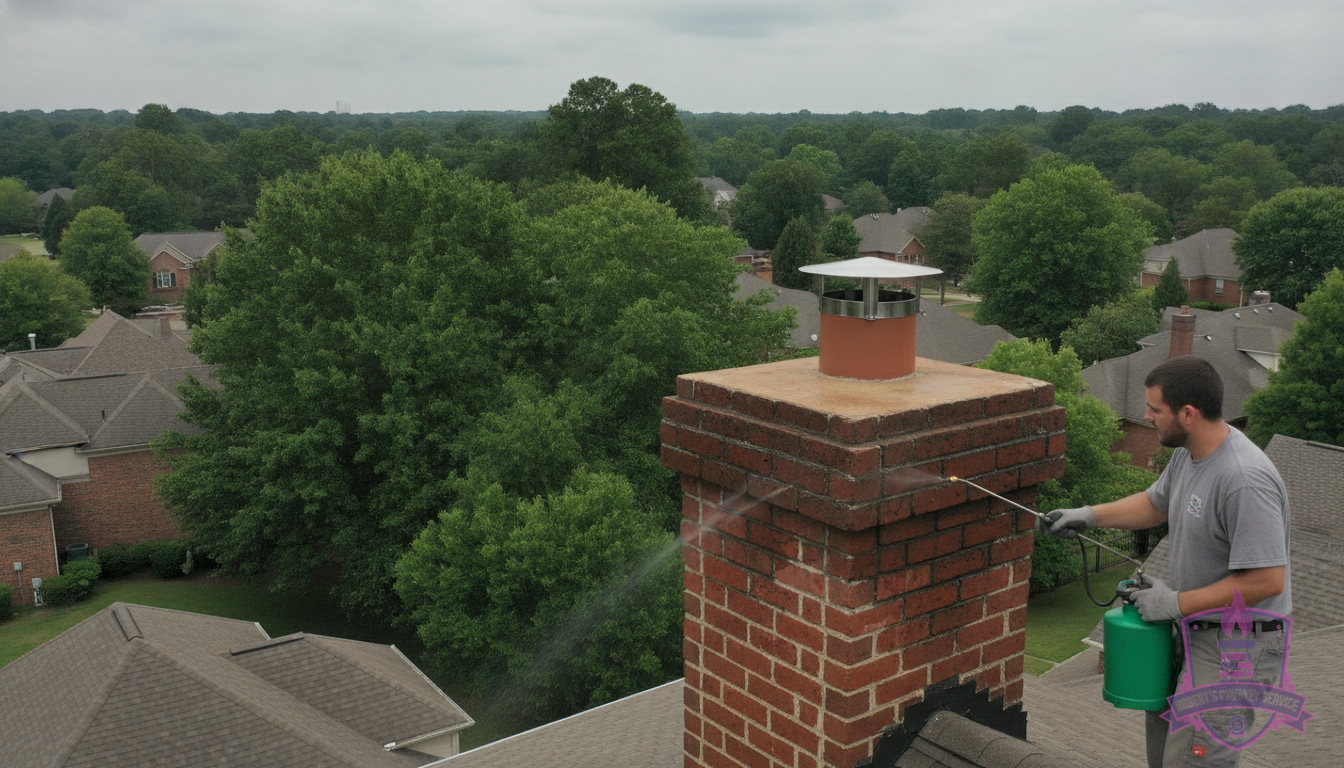
The waterproofing products Robert's Chimney Service uses are vapor-permeable penetrating sealants specifically formulated for chimney masonry. These products:
- Penetrate into the brick surface rather than forming a film on top
- Create a hydrophobic barrier that repels liquid water from entering
- Remain open to water vapor transmission, allowing any existing moisture to escape outward
- Do not alter the appearance or color of your brick
- Bond permanently to the masonry surface rather than peeling or flaking like paint
The result is a chimney that sheds rain like a treated rain jacket while still breathing naturally — protecting the masonry from the outside without trapping moisture inside.
When Should You Waterproof Your Charlotte Chimney?
Chimney waterproofing is most effective when applied to masonry that is in sound condition — meaning the brick faces are intact, mortar joints are full and firm, the crown is solid, and the cap is in place. Applying sealant over deteriorated masonry locks in problems rather than solving them. This is why our process always begins with a thorough assessment.
The right time to waterproof your chimney is:
- After masonry repairs or repointing: Freshly repaired mortar joints and replaced bricks should be sealed to protect the new work from water infiltration. New mortar is often more porous than the original until it cures fully.
- After chimney crown repair: A repaired or rebuilt crown combined with a full waterproofing treatment seals your entire above-roofline chimney system comprehensively. Ask about pairing our chimney cap and crown repair service with waterproofing in a single visit.
- Every 5–10 years as preventive maintenance: Professional-grade chimney waterproofing treatments typically last 5–10 years under normal conditions. Chimneys in exposed locations or those subjected to heavy annual rainfall may need reapplication closer to the 5-year mark.
- Before the rainy season: In Charlotte, late winter or early spring — before the heavy spring rain season — is an ideal time to apply waterproofing so your chimney enters the wettest months fully protected.
Warning Signs Your Chimney Needs Waterproofing Now
If you're seeing any of the following on your chimney, don't wait for a scheduled maintenance window:
- White powder or streaks (efflorescence) on exterior brick
- Crumbling or missing mortar between bricks
- Brick faces that are flaking or chipping off
- Water stains, rust streaks, or dampness inside the firebox
- A musty odor from the fireplace during or after rain
- Visible cracks in the chimney crown
These signs indicate that water damage is already in progress. Our technicians will assess whether waterproofing alone is sufficient or whether masonry repairs need to happen first. In many cases we can complete both repairs and waterproofing in a single appointment, particularly for homeowners in close-in Charlotte neighborhoods like Dilworth and Myers Park where historic chimneys are a priority.
How Waterproofing Fits Into Your Overall Chimney Maintenance Plan
The most cost-effective approach to chimney ownership is a consistent annual maintenance routine. At a minimum, that means:
- Annual chimney sweep and cleaning before the heating season
- Annual or biennial chimney inspection to catch structural issues early
- Waterproofing treatment every 5–10 years
- Prompt cap and crown maintenance whenever rooftop access reveals deterioration
Homeowners who follow this routine consistently spend a fraction of what those who defer maintenance pay for reactive repairs. A chimney waterproofing treatment costs a small fraction of what chimney liner replacement or full firebox reconstruction costs — and in most cases, proper waterproofing is what prevents you from ever needing those major repairs.
Schedule Chimney Waterproofing in Charlotte Today
Robert's Chimney Service serves all of Charlotte and Mecklenburg County including NoDa, Plaza Midwood, Dilworth, Myers Park, SouthPark, and University City, Monday through Sunday from 8 AM to 6 PM. Whether you need a standalone waterproofing treatment or a comprehensive chimney maintenance package, we're ready to help.
Call (980) 480-4169 or email [email protected] to schedule your assessment. Protecting your chimney from Charlotte's rain starts with a single call.