Whether you've just purchased a home in Myers Park, noticed smoke drifting into your living room in Dilworth, or simply want peace of mind before the heating season in University City, understanding what kind of chimney inspection you need is the first step toward a safer fireplace. The National Fire Protection Association's NFPA 211 standard defines three levels of chimney inspection, and two of them — Level I and Level II — apply to most residential situations in Charlotte.
At Robert's Chimney Service, we perform both Level I and Level II inspections across Charlotte and surrounding Mecklenburg County communities, seven days a week. Here's a clear breakdown of what each level covers, how they differ, and which one is right for your situation.
What Is a Level I Chimney Inspection?
A Level I inspection is the standard annual inspection — the baseline that every fireplace owner should have performed at least once a year. During a Level I inspection, our technicians examine all readily accessible portions of the chimney's exterior and interior. That means:
- The firebox interior, including brick, mortar, and refractory panels
- The damper and smoke shelf
- The smoke chamber above the damper
- The exterior of the chimney stack, including the crown and cap, from ground level or from inside the home
- The accessible portion of the flue interior using a flashlight and mirror
A Level I inspection is appropriate when your chimney has been in regular service without any significant changes — same appliance, same fuel type, no known history of chimney fires or extreme weather events. Think of it as your chimney's annual wellness checkup.
We typically combine a Level I inspection with our chimney sweep and cleaning service so you get a full picture of your flue's condition at the same time we're removing creosote and debris. Most combined visits take between 60 and 90 minutes.
What Is a Level II Chimney Inspection?
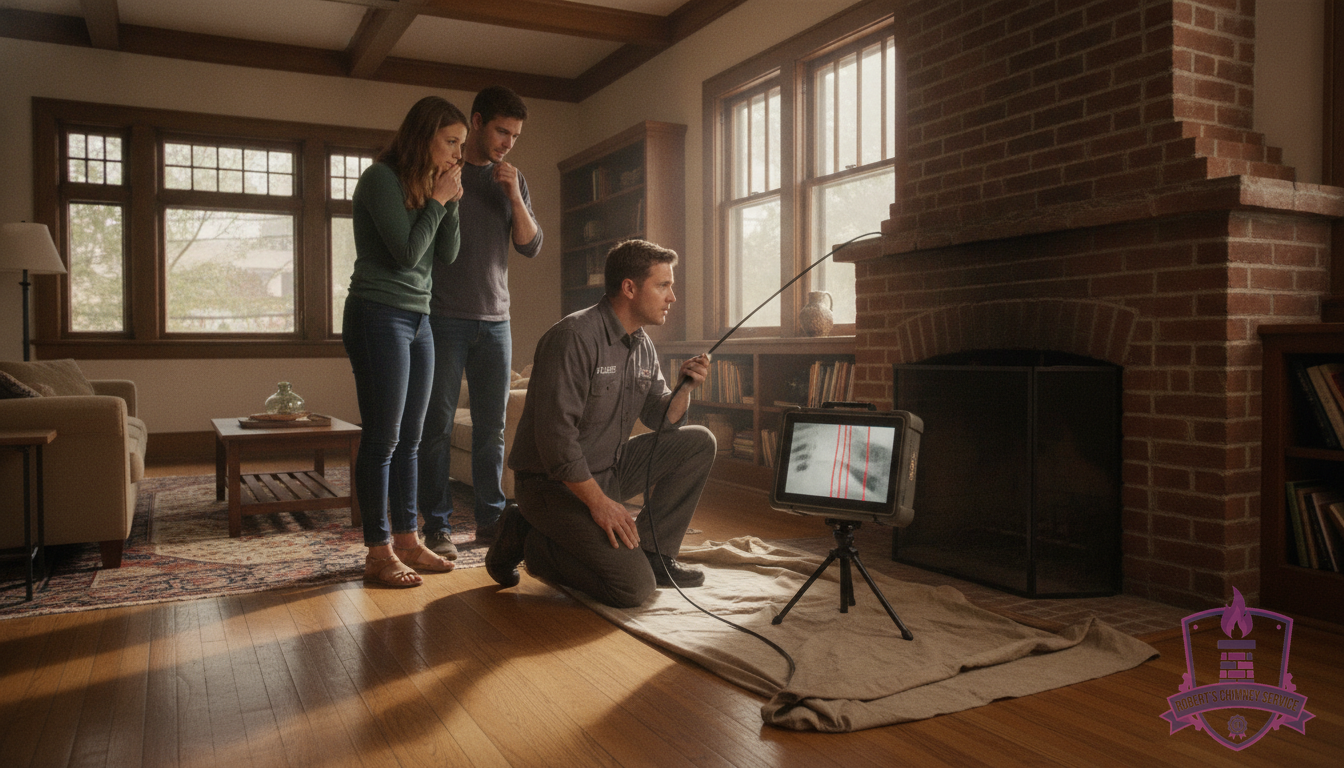
A Level II inspection is a more comprehensive evaluation required under specific circumstances. It includes everything covered in a Level I, plus video scanning of the entire flue interior using a high-resolution push-rod camera system. This technology allows our technicians to detect:
- Hairline cracks in clay tile liner sections invisible to the naked eye
- Separated or offset liner joints that allow heat and combustion gases to escape into surrounding framing
- Collapsed tile sections partially blocking the flue
- Deteriorated mortar joints deep inside the flue where a flashlight cannot reach
- Evidence of previous chimney fires (distorted or discolored liner tiles)
According to NFPA 211, a Level II inspection is required whenever:
- You are buying or selling a home
- You change the fuel type or appliance connected to the chimney (for example, converting from a wood fireplace to a gas insert)
- A chimney fire, earthquake, or severe weather event has occurred
- The chimney has sustained any damage or unusual occurrence
For Charlotte homebuyers, a Level II inspection is strongly recommended even when the standard home inspection appears to pass the chimney without concern. General home inspectors are not chimney specialists — they typically note the visible condition of the firebox and exterior brick but do not camera-scan the flue liner. Hidden liner cracks are one of the most common and costly surprises new homeowners discover after their first fire.
Why Charlotte's Climate Makes Regular Inspections Critical
Charlotte sits in a climate zone where summers are hot and humid and winters bring occasional hard freezes. This combination is particularly damaging to masonry chimneys. Here's why:
- Summer humidity allows moisture to penetrate brick and mortar through micro-pores, especially on chimneys with deteriorated crowns or missing caps.
- Winter freeze-thaw cycles cause that trapped water to expand as it freezes, progressively cracking bricks, widening mortar joints, and fracturing clay tile liner sections.
- Heavy rain events from spring and summer storm systems drive water directly into any open cracks, accelerating the cycle.
Older neighborhoods like NoDa, Plaza Midwood, and Dilworth feature homes built in the early and mid-20th century with original clay tile liners that are now 50–80 years old. These liners were not designed for modern high-efficiency gas appliances and are particularly prone to developing the cracks and separations that only a Level II video scan can reliably detect.
What Happens After the Inspection?
Every inspection Robert's Chimney Service performs — Level I or Level II — concludes with a written findings report and, for Level II inspections, on-site video review with the homeowner. We walk you through any damage we've found, explain the safety implications, and prioritize recommendations by urgency so you know what needs immediate attention and what can be monitored over time.
If our inspection reveals liner damage, we'll discuss your options for stainless steel chimney liner installation. Crown or cap problems identified during the inspection can often be addressed the same day with our cap and crown repair service. Firebox mortar and firebrick issues are handled by our fireplace and firebox repair team.
Book Your Chimney Inspection in Charlotte Today
Whether you need a routine Level I checkup or a full Level II video scan for a home purchase, Robert's Chimney Service is available Monday through Sunday, 8 AM to 6 PM, throughout Charlotte and Mecklenburg County. We serve SouthPark, Myers Park, NoDa, Plaza Midwood, Dilworth, University City, and all surrounding communities.
Call (980) 480-4169 or email [email protected] to schedule your chimney inspection. Don't light another fire without knowing what's inside your flue.